Episode Summary
AI often gets talked about as something for big companies with technical teams. Saima Malik, AVP of Enterprise Process and Automation at TD, argues it belongs to every single person, and that the five skills that matter most for AI are ones people already have. She has spent more than 25 years in digital technology and transformation, and now puts much of her energy into access for women founders, seniors, and community organizations. She names curiosity, courage, creativity, critical thinking, and compassion, and closes on the three stages she uses for the work: access, adoption, and acceleration.
Key Takeaways
Canada ranks 44th out of 47 nations on AI training and literacy
A Senate report from June 2026 put Canadian AI training at 24 percent of the population against a 39 percent global average, with women and underserved communities at the lower end of that.
You don’t need to be a coder to build with AI
Two years ago, building with these tools required technical understanding, and in the last six months they have become conversational enough that describing a business problem is enough to be walked through solving it.
The five skills that matter for AI are curiosity, courage, creativity, critical thinking, and compassion
Saima calls these the five C’s, and her argument is that entrepreneurs already have them because they know their problem, their customer, and the markets they want to serve.
Jobs will look very different rather than disappear
She treats replacement as a myth, pointing out that every level of technology transformation has produced new jobs, new roles, and new products and services alongside the ones it changed.
Starting with the business outcome produces different systems than starting with the technology
Her advice to entrepreneurs is to name the outcome first and work backwards, because deciding to build an AI agent up front may not solve the problem or reach the goal.
Access has to come before adoption, and adoption before acceleration
Access means the internet connection, hardware, and training that some communities still do not have, and adoption only happens once trust has been built with the people being asked to use the tools.
Episode Highlights
Still the only woman of colour at the table
Saima’s work on AI access traces back to her own career rather than to a strategy document. She describes being the only woman, and often the only woman of colour, in the room when she started out. She says it has not entirely stopped.
“When I started, I was often the only woman in the room. I was often the only woman of colour in the room. Sometimes I still find myself at tables where that happens. And really, it’s that lived experience that makes me so passionate about wanting to change the future for women.”
The first file to build in Claude
Imran asked about practical ways professionals and entrepreneurs can start using AI in their daily work. Saima’s answer begins before any project or use case, with a single file that gives the AI context about you. She puts the daily time commitment at anywhere from fifteen minutes to an hour.
“Talk for 15 minutes. The AI will listen to you forever, so talk about yourself. And the output of that is you’ll have an amazing file at the end that captures your career history, your personal likes, how you like to work.”
Where agent workforces change the math for a small organization
Imran had asked her to compare the Claude products. Her answer moved to the women she works with who are building community organizations and non-profits, and what changes for them once they can build agent workforces.
“And that is truly turning the tide, where you’re now going to be able to compete with the larger organizations because you’re actually able to build these agent workforces in doing some of the things that you need to get done on a day-to-day basis in an automated way, at a much lower cost and at the scale that you might be looking for.”
Executive Questions
Why do seniors and underserved communities get left behind on AI?
Access is more basic than training in some places, coming down to internet access, computers and hardware, and phones to try things out, and that is not available everywhere. Seniors are a different case, since they may already have the phone, the computer, and the internet but still need the training. Saima notes the government has launched a major program that will focus on AI literacy.
How do you build trust with people who are afraid of AI?
Saima describes the barrier as psychological, and hears it most often as “I’m not a techie.” Her aim is to get people comfortable enough to open the AI chat and learn the first five steps that set them up for success, without needing to be technically fluent. She treats adoption as something that only happens once that trust exists.
How will AI change the way we work over the next few years?
Saima’s view is that the conversation about work being replaced is too narrow. The bigger change is people moving from wanting to do existing work better and faster to wanting to create something entirely new, with a more advanced toolkit available for it. She also expects new products, services, and careers, and points to content creation as one nobody predicted.
Why is AI significant for non-profit and community organizations?
Saima does a lot of work in the non-profit community and says the tool set changes the economics of their cost to serve. It also changes how they reach their communities and the kinds of products and services they can offer, including transparency about the impact they make. The acceleration possible in that community is what she says excites her most.
What does AI for humanity mean?
Saima uses the phrase to push back on the assumption that AI belongs to large companies. Her point is that it is for every single person, including women, underserved communities, and community organizations. Having spent a long career in the enterprise space, she treats the idea that AI is not for you as a myth.
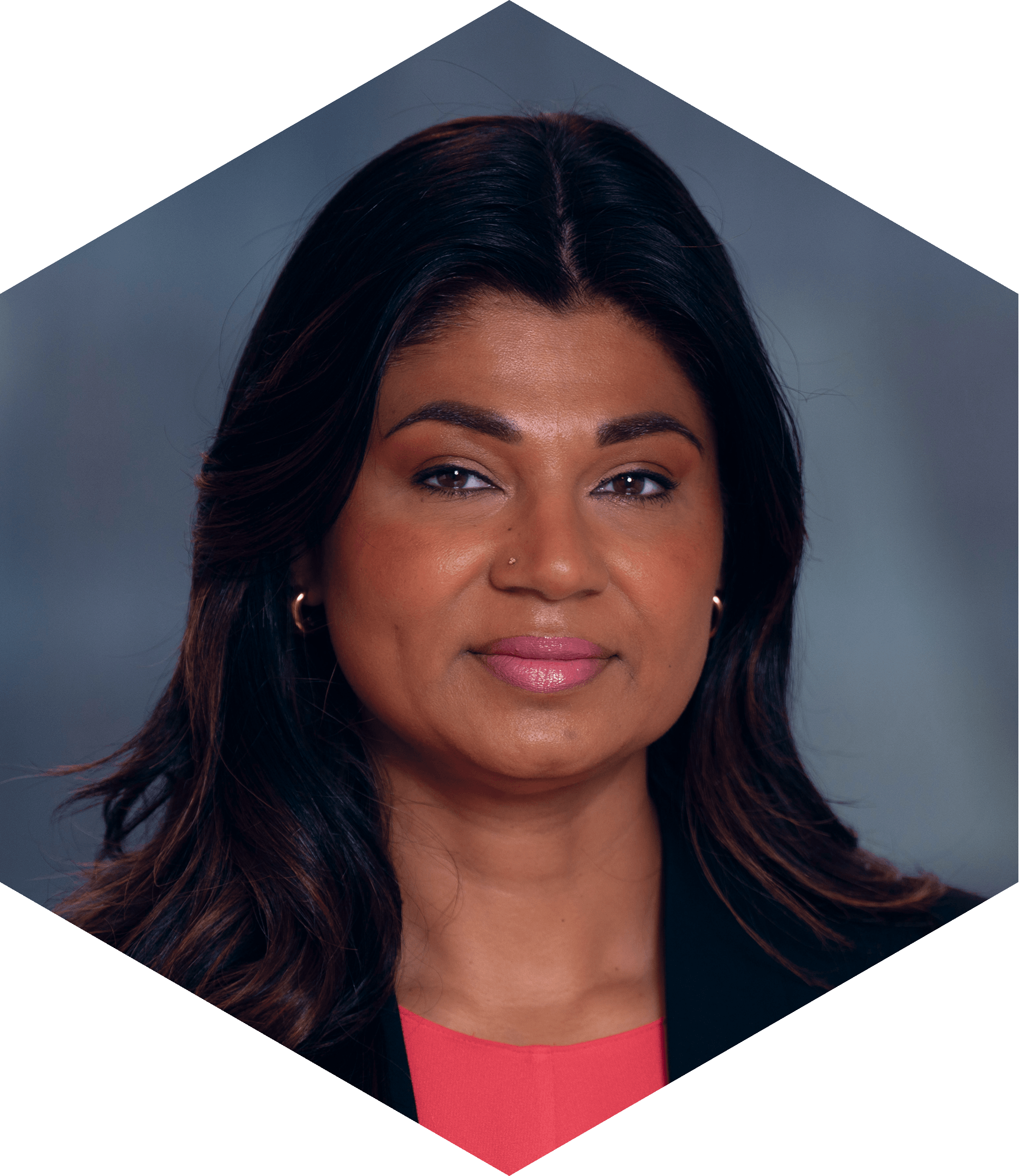
- Name: Saima Malik
- Role: AVP Enterprise Process and Automation, TD
- Saima Malik is an enterprise transformation executive with 25+ years of leadership spanning consulting, digital, technology, AI and automation. She founded and leads TD’s Enterprise Process Automation Centre of Excellence, driving enterprise-wide transformation at the intersection of process redesign, agentic and intelligent automation. Her work has moved well beyond pilots into the emerging ecosystem of agents and digital workers: keeping it human-centred, redefining how work gets done, and holding colleagues at the centre. A committed sponsor and mentor of women in technology and leadership, she has spoken at global forums including GITEX Dubai, University of Toronto, and Scale Without Borders, and is a 2026 WSIS Women and Girls Trendsetters nominee.